
5 Ways to Tell if You Have Test Anxiety

How do I know if I have Test Anxiety?
Test anxiety can affect your performance on high-stakes tests and make you miserable. If you know the signs, you can stop test anxiety before it stops you.
How do you know if you have test anxiety? Here are 5 signs that you’re experiencing problematic test anxiety:
1 - You become obsessed before the test.
For some people who experience test anxiety, the anticipation is almost worse than the exam itself!
You may have test anxiety if you become preoccupied by thoughts about the test in the days and weeks beforehand. What if I fail? What if I disappoint my family? What if everyone finds out I’m not that smart?
Even if you want to get some sleep to study or to be rested for the test, it can be very difficult to “turn off” your anxious brain. Instead of studying, worry has hijacked your brain.
2 - Your body reacts during the test.
Our fight or flight response is hardwired. Sometimes the alarm goes off in situations that are important to us… even though we aren’t in physical danger. If your body has an outsized reaction to test taking that you can’t ignore, you are experiencing the physiological component of test anxiety.
Here are some of the most common anxiety-related physical sensations:
Hand shaking
Confusion
Dizziness
Sweating
Difficulty concentrating
Heart racing
Shortness of breath
3 - You are often surprised by your score.
Have you ever left an exam convinced you failed? Did you actually do very well? What about feeling like you killed and it turned out… you really didn’t? Test anxiety can make it difficult to accurately measure your performance during and after an exam.
4 - You’re convinced you’re a “bad test taker.”
You may actually be experiencing test anxiety. Anxiety affects your responses to test questions by competing for your brain’s attention and focus, interfering in the logical reasoning process, and even derailing decision making. For example, if you don’t immediately know the answer, it is common for people who experience test anxiety to think “I have no idea” or “This is my worst subject.” This thought can make you guess or give up. When test anxiety hijacks your thoughts, you can lose points on questions that you might have been able to figure out.
5 - You change your plans for the future.

Do you do everything you can to avoid test taking? Many students with test anxiety choose courses based on what they’ve heard about the tests in the course. Or even choose a career path based on admissions testing requirements.
If you’re considering changing your plans or giving up because of test anxiety, there’s good news. You can overcome test anxiety! When you are confident that you can manage test anxiety, you can choose what you actually want to do and make it happen.
So, what can I do about it?
1 - Commit to your actions, not the outcome.
You can’t control the outcome, but you can control what you do - create and commit to a plan of action that will increase the likelihood of the outcome you want.
2 - Don’t ignore test anxiety.
Write down the anxious thoughts and challenge them head on. Take anxiety’s power away by allowing yourself to face the worst case outcome. Use our free Hack Your Test Anxiety worksheet to get started.
3 - Get Familiar with the test.
Learning as much about the format of the test as you can is one way to confront test anxiety and reduce confusion and helplessness on test day. For example, if you are taking the SAT, watch our video on what you need to know about the new digital format.
If your exam is at a testing center you’ve never been to before, try to visit it ahead of test day if you can. Knowing how to get there and what to expect when you do can help reduce those dreaded test day jitters.
4 - Train how you fight.
Take a full-length practice test and simulate the conditions you will face on test day as closely as possible. Football players practice on the field with their pads on. Hockey players practice on the ice.
For you, is your exam going to be administered in a classroom or at the testing center? Will it be on paper, a computer, or a laptop? No phones allowed?
5 - Have a plan.
Last on this list, but certainly not least, is to have a plan. Not just what time you’re leaving the house! You need to know exactly what to do for each question type on the exam. Test Wolf experts have created recommendations specific to each test. Having a well-rehearsed, anxiety-resistant strategy is key to overcoming test anxiety and increasing your score. Know how you are going to approach every section, every question, every time.
This will keep test anxiety from tripping you up with nonsense in-the-moment decisions like skipping questions or assuming the most common answer is C.
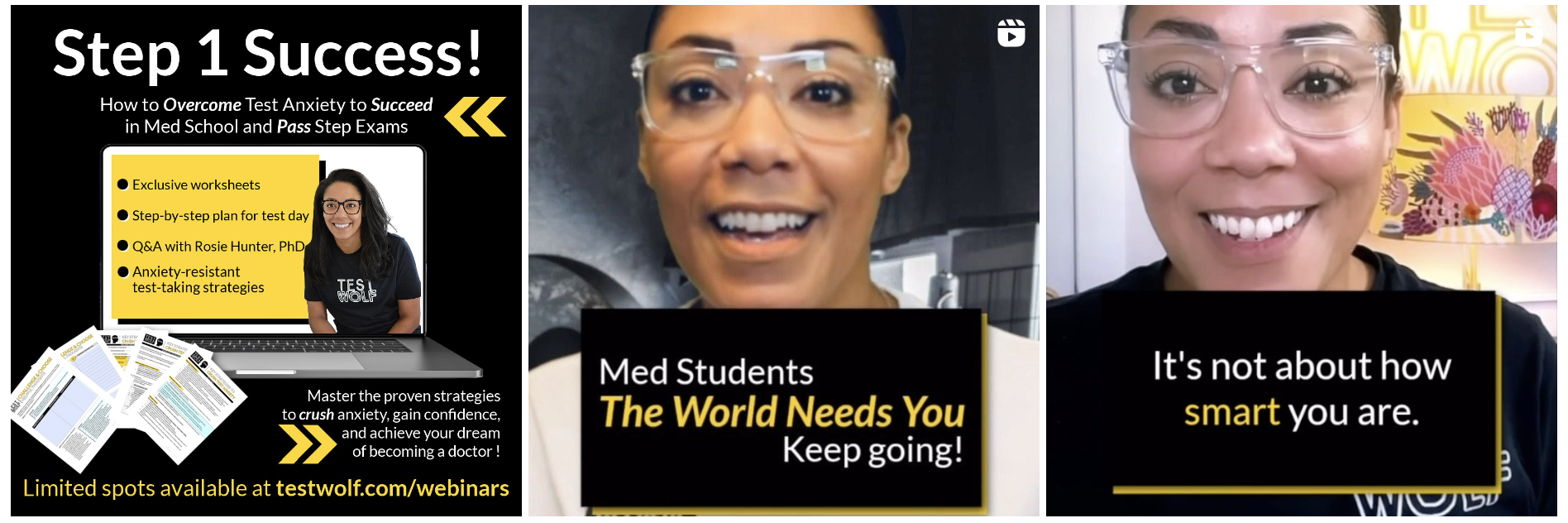
Follow us on Instagram @TheTest Wolf for more test anxiety tips!
If you or someone you know is struggling or in crisis, help is available. Call or text 988 or chat 988lifeline.org.